
"What is the minimum pressure required for a spray pump to work?"
As a supplier of spray pumps, I often encounter inquiries about the minimum pressure required for these essential devices to function effectively. Understanding this parameter is crucial for various applications, from household use to industrial and agricultural settings. In this blog post, I'll delve into the factors that determine the minimum working pressure of a spray pump and provide some insights based on our experience in the industry.
Understanding the Basics of Spray Pumps
Before we discuss the minimum pressure requirements, let's briefly review how spray pumps work. A spray pump is designed to convert liquid into a fine mist or spray by creating a pressure differential. When the pump is activated, it draws liquid from a reservoir and forces it through a nozzle at high speed. The nozzle is engineered to break the liquid into small droplets, creating a spray pattern.
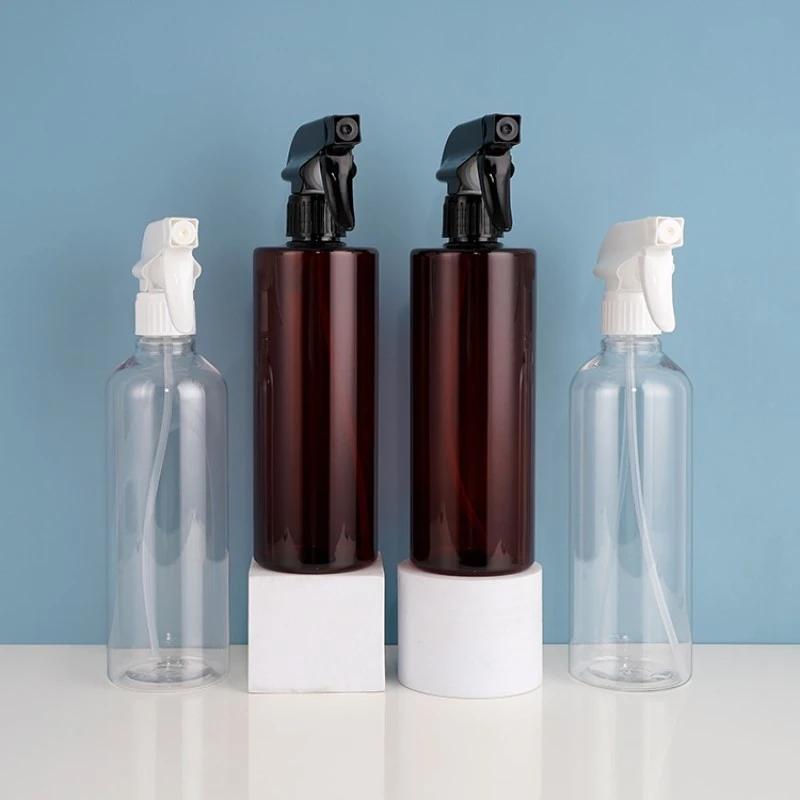

The performance of a spray pump depends on several factors, including the design of the pump, the type of liquid being sprayed, and the desired spray pattern. Different applications may require different levels of pressure to achieve the optimal spray characteristics.
Factors Affecting the Minimum Pressure Requirement
Pump Design
The design of the spray pump is a primary determinant of its minimum working pressure. There are various types of spray pumps, including piston pumps, diaphragm pumps, and centrifugal pumps, each with its own pressure requirements.
Piston pumps, for example, are known for their high-pressure capabilities. They use a reciprocating piston to create pressure, and the minimum pressure for these pumps can range from a few hundred pounds per square inch (psi) to several thousand psi, depending on the specific model. Diaphragm pumps, on the other hand, are more commonly used in low-pressure applications, with minimum pressures typically ranging from 10 to 100 psi.
Centrifugal pumps rely on the rotation of an impeller to generate pressure. These pumps are often used in applications where a large volume of liquid needs to be sprayed at relatively low pressure. The minimum pressure for centrifugal pumps can vary widely, but it is generally in the range of 5 to 50 psi.
Liquid Properties
The properties of the liquid being sprayed also play a significant role in determining the minimum pressure requirement. Viscosity, surface tension, and density are some of the key factors that affect the ease with which a liquid can be atomized.
High-viscosity liquids, such as oils and thick paints, require more pressure to break them into small droplets compared to low-viscosity liquids like water. Similarly, liquids with high surface tension tend to form larger droplets and may require higher pressure to achieve a fine mist. The density of the liquid can also impact the pressure needed to pump it through the nozzle.
Nozzle Design
The design of the nozzle is another critical factor in determining the minimum pressure for a spray pump to work. Nozzles come in various shapes and sizes, each designed to produce a specific spray pattern. The size of the nozzle orifice, the angle of the spray, and the internal geometry of the nozzle all affect the pressure requirements.
For example, a fine mist sprayer typically requires a higher pressure to produce a very fine and uniform mist compared to a broader spray nozzle. The Fine Mist Sprayer we offer is engineered to create a fine, even mist, and it may need a certain minimum pressure to function optimally.
Applications and Their Pressure Requirements
Household Applications
In household settings, spray pumps are commonly used for tasks such as cleaning, gardening, and personal care. For example, a Spray Bottle For Bottle used to spray cleaning solutions or water for plants usually operates at a relatively low pressure, typically around 10 to 30 psi. These low-pressure pumps are easy to operate and are sufficient for most household tasks.
Industrial Applications
Industrial applications often require higher pressures to achieve the desired spray performance. For instance, in automotive painting, a spray pump needs to deliver a high-pressure stream of paint to ensure a smooth and even finish. The minimum pressure for industrial paint sprayers can range from 100 to 500 psi, depending on the type of paint and the spraying equipment.
In the food and beverage industry, spray pumps are used for applications such as flavoring, coating, and cleaning. These pumps may need to operate at pressures ranging from 20 to 200 psi, depending on the specific process requirements.
Agricultural Applications
Agricultural sprayers are used to apply pesticides, fertilizers, and water to crops. The minimum pressure for agricultural spray pumps depends on the type of crop, the spraying method, and the size of the droplets required. For example, a boom sprayer used for large-scale field spraying may need a pressure of 30 to 100 psi to ensure proper coverage, while a handheld sprayer for spot treatment may operate at a lower pressure.
Testing and Determining the Minimum Pressure
To determine the minimum pressure required for a specific spray pump and application, it is often necessary to conduct testing. This can involve using pressure gauges to measure the pressure at different points in the pump system and adjusting the pressure until the desired spray pattern is achieved.
It's important to note that the minimum pressure is not the only factor to consider when evaluating the performance of a spray pump. Other factors, such as flow rate, droplet size, and spray pattern uniformity, also play a crucial role in determining the effectiveness of the spray.
Conclusion
In conclusion, the minimum pressure required for a spray pump to work depends on a variety of factors, including pump design, liquid properties, and nozzle design. Different applications have different pressure requirements, and it's essential to choose a spray pump that can meet the specific needs of the task at hand.
As a spray pump supplier, we offer a wide range of pumps suitable for various applications. Our team of experts can help you select the right pump and provide guidance on the optimal operating pressure. If you're interested in learning more about our spray pumps or have any questions about the minimum pressure requirements for your application, please don't hesitate to contact us. We're here to assist you in finding the best solution for your spraying needs.
References
- "Spray Technology Handbook" by A. H. Lefebvre
- "Fluid Mechanics and Hydraulics" by R. C. Hibbeler
- Industry standards and guidelines for spray pump manufacturers