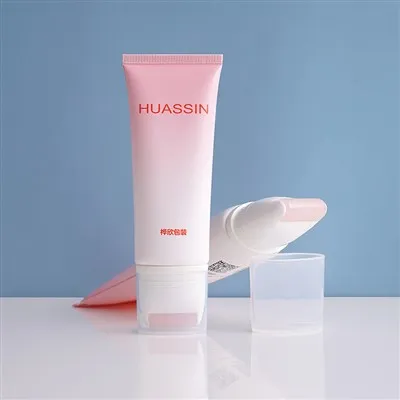

As a long - standing supplier of plastic tubes, I've witnessed the growing demand for plastic tubes across various industries, from cosmetics to food. One question that often arises among our clients is the adhesion property of plastic tubes. In this blog, we'll delve into the details of the adhesion characteristics of plastic tubes, exploring the factors that influence it and its significance in practical applications.
Understanding Adhesion in Plastic Tubes
Adhesion refers to the ability of a material to cling to another surface. In the context of plastic tubes, it can refer to several things. For example, in the case of laminated plastic tubes, the adhesion between different layers of plastic and other materials (such as aluminum foil in barrier tubes) is crucial for the tube's performance. A strong adhesion ensures that the layers do not delaminate during the manufacturing process, storage, or usage of the tube. Additionally, when it comes to printing on plastic tubes, good adhesion of ink to the tube surface is essential for high - quality and long - lasting branding.
Factors Affecting Adhesion of Plastic Tubes
1. Material Selection
The type of plastic used in the tube plays a significant role in adhesion. Different plastics have different surface energies, which affect how well they bond with other substances. For instance, polyethylene (PE) and polypropylene (PP) are widely used in plastic tube manufacturing due to their excellent chemical resistance and flexibility. However, they have relatively low surface energies, which can make it challenging to achieve good adhesion. To overcome this, surface treatment methods such as corona treatment can be applied to increase the surface energy of these plastics, making them more receptive to inks, coatings, and adhesives.
2. Surface Preparation
Proper surface preparation is essential for achieving good adhesion. Before applying inks, labels, or adhesives, the plastic tube surface needs to be clean and free from contaminants such as dust, oils, and release agents. Solvent cleaning or plasma treatment can be used to remove these contaminants and improve the surface roughness, thereby increasing the surface area available for bonding and enhancing adhesion.
3. Adhesive or Ink Properties
The properties of the adhesive or ink used on the plastic tube also matter. The adhesive should have suitable viscosity, curing time, and chemical compatibility with the plastic material. For example, epoxy - based adhesives are known for their strong bonding strength and can be a good choice for plastic tubes, especially when high - strength adhesion is required. The ink used for printing should also be formulated to adhere well to the plastic surface, taking into account factors such as temperature, humidity, and the type of printing process (e.g., flexographic or silk - screen printing).
4. Manufacturing Process
The manufacturing process of the plastic tube can impact adhesion. For example, in extrusion - blow molding, the cooling rate of the tube can affect its surface properties. If the cooling is too rapid, the surface may have internal stresses that can reduce adhesion. On the other hand, in the lamination process, the pressure and temperature applied during the bonding of different layers are critical for ensuring good adhesion.
Significance of Good Adhesion in Different Applications
1. Cosmetics Industry
In the cosmetics industry, plastic tubes are widely used for packaging products such as lip gloss, skincare creams, and facial cleansers. Good adhesion is essential for several reasons. First, for Empty Clear Lip Gloss Tube, the adhesion of the cap to the tube ensures a tight seal, preventing the lip gloss from leaking. Second, in the case of 15ml Custom Logo Colors Special Shape Cosmetic Plastic Packaging Skincare Cream Container Sunscreen Sunblock Cream Tube, high - quality printing on the tube with good ink adhesion is necessary for brand visibility and marketing. Third, for 120ml Empty Plastic Squeeze Tubes Cosmetic Cream Lotion Facial Cleanser Cream Packaging Skincare Container Face Wash Tube, the adhesion between the tube layers (if it is a laminated tube) ensures the product's integrity and protection from external factors such as oxygen and moisture.
2. Food Industry
In the food industry, plastic tubes are used for products like honey. For 66g Honey Food Packaging Tube, good adhesion is crucial for maintaining the hygiene and safety of the product. The seal between the tube and the cap must be reliable to prevent contamination. Additionally, if there are labels on the tube, they should adhere well to withstand handling and storage conditions without peeling off.
3. Medical and Pharmaceutical Industry
In the medical and pharmaceutical fields, plastic tubes are used for packaging products such as face masks in some cases. For ABL Face Mask Tube, good adhesion in lamination and printing is essential. The tube needs to protect the face mask from damage and contamination, and the printed information on the tube (such as usage instructions and ingredients) must be clear and firmly attached.
Ensuring Good Adhesion in Our Plastic Tubes
At our company, we take several measures to ensure that our plastic tubes have excellent adhesion properties. First, we carefully select high - quality plastic materials and conduct thorough quality control checks. Before any surface treatment or printing, we perform surface cleaning and preparation to remove all contaminants. Our R&D team is constantly working on improving the adhesive formulations and printing processes to achieve the best possible adhesion.


We also invest in advanced manufacturing equipment and technology. For example, our corona treatment machines are state - of - the - art, which can precisely control the surface energy of the plastic tubes. In the lamination process, we use advanced presses that can apply the right amount of pressure and temperature to ensure strong bonding between layers.
Conclusion and Call to Action
In summary, plastic tubes can have good adhesion properties when the right factors are considered and managed properly. The adhesion of plastic tubes is crucial for the performance, appearance, and safety of the products they package across various industries.
If you are in the market for high - quality plastic tubes with excellent adhesion properties, we'd love to hear from you. Whether you need tubes for cosmetics, food, or medical products, we have a wide range of options to meet your specific requirements. Contact us today to discuss your plastic tube needs and start a fruitful procurement journey.
References
- Introduction to Polymer Science and Technology, Third Edition by R. J. Young and P. A. Lovell
- Handbook of Adhesion Technology, Second Edition by S. Adhikari
- Plastics Packaging Technology: Principles and Practice by Andrew A. Griffiths